RAPID PROTOTYPING
Rapid Prototyping
Rapid Prototyping is a technology used to quickly create physical prototypes from digital designs. It enables engineers and designers to test concepts, evaluate functionality, and refine product designs before moving to full-scale production. By accelerating the development process, rapid prototyping helps reduce design errors, shorten development time, and lower overall production costs.
Common Rapid Prototyping Technologies:
- 3D Printing
Creates physical prototypes by building objects layer by layer from digital models. It is widely used for quick design validation and concept testing. - CNC Machining
Uses computer-controlled machines to precisely cut and shape materials such as metal or plastic, producing highly accurate and functional prototypes. - Vacuum Casting
Uses silicone molds to replicate prototypes in small quantities, commonly used for testing product appearance and functionality before mass production.

As-Built Services
- Rapid prototyping
- Small-batch and low-volume production
- Custom part manufacturing
- Functional and aesthetic printing
- Printing using ABS, PLA and metal 3D printing technologies
Solutions
- Automotive
- Aerospace
- Building & Piping
- Power & Energy
- Pulp & Paper Mill
- Ship Building
Ask Us About This
Rapid Prototyping Flow
1. Ideation and Conception (Concept)
It all starts with the problem you want to solve. At this stage, the team determines:
- Product goal: What is its primary function?
- Rough sketch: Drawing the concept on paper or a whiteboard to visualize the initial form.
- Key features: Determining what elements should be included in the first prototype.
2. Digital Modeling (3D CAD Design)
Abstract concepts are converted into digital data using CAD (Computer-Aided Design) software.
- Designers create highly accurate 3D models with realistic dimensions.
- These models serve as digital “blueprints” that are later read by manufacturing machines.
3. File Conversion and Slicing (STL Conversion and Slicing for 3D Printing)
In order for a machine (such as a 3D printer or CNC) to understand a CAD design, the file must be converted to a standard format, usually .STL (Standard Tessellation Language).
- This format breaks down the object’s surface into thousands of small triangles (a mesh).
- The file is then processed through slicer software to define cutting paths or print layers.
4. Prototyping (Fabrication/3D Printing)
This is the “Rapid” or core stage. Using additive manufacturing techniques, machines build the prototype layer by layer.
- Popular techniques include FDM (liquid plastic), SLA (liquid resin), or SLS (polymer powder).
- This process is much faster than traditional molding methods, which can take weeks.
5. Testing and Evaluation
Once the physical prototype is complete, it’s time for real-world testing:
- Fit & Finish: Does the size fit? Do the components fit properly?
- Functionality: Does the device perform as intended?
- User Feedback: Soliciting potential users’ opinions to assess user experience.
6. Iterate and Improve
Based on the testing results in step 5, deficiencies or areas for improvement are usually identified.
- Back to Design: The team returns to step 2 to refine the CAD model.
- Reprint: A new prototype is created and tested again.
- This process continues until the product is deemed perfect and ready for mass production.
eVTOL Cavorite X5 Aircraft Prototype
Prototype Part Production by 3D Printer for Aircraft Frame and Propeller
Prototype of Housing, Internal Fan, and Ducted Fan
Material For 3D Printing
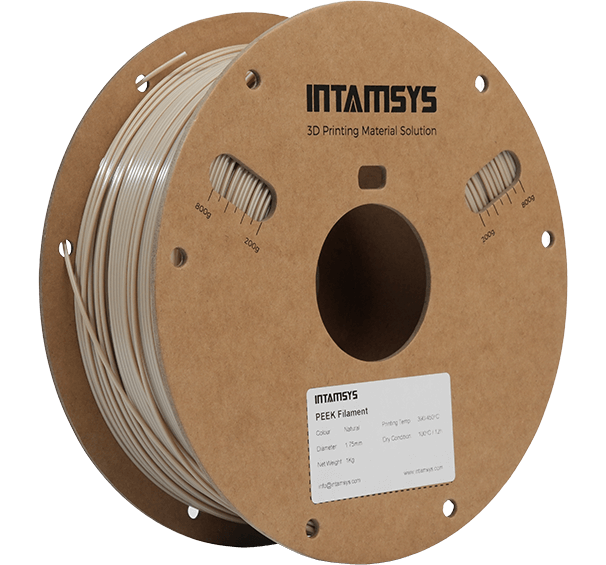
PEEK (Polyether ether ketone)
Polyether ether ketone is one of the best-performing plastics ever made. PEEK has excellent mechanical, thermal, and chemical resistance, making it the material of choice in some of the most demanding applications.
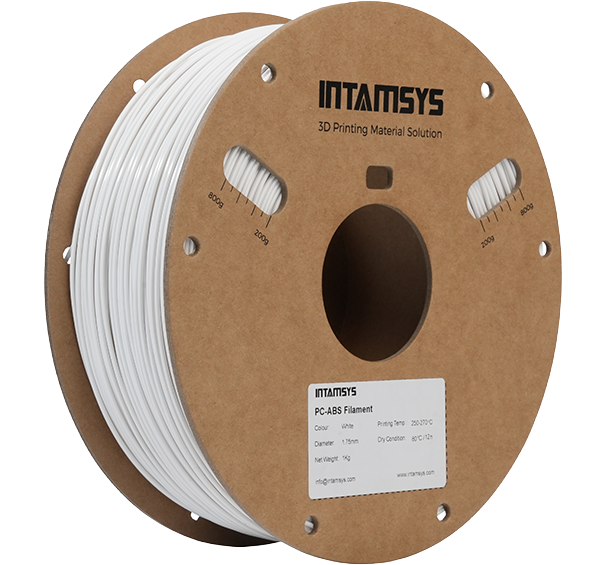
ABS
ABS (acrylonitrile butadiene styrene copolymer) is a common general purpose thermoplastic 3D printing consumable with good mechanical strength balance, high dimensional stability and certain chemical resistance. ABS has characteristics that make it suitable for engineering design, prototyping, functional testing, part assembly, etc.
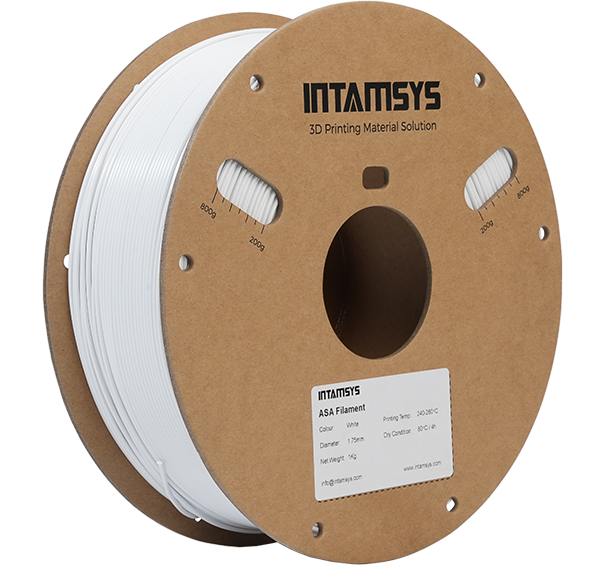
ASA
ASA is a thermoplastic material similar to ABS, with good mechanical and thermal properties, while having excellent weather resistance and UV light resistance. As the first choice for outdoor applications. Features low gloss with good surface quality.